Tavrida.ART Digital Twin: from an educational brief to a working product
What happens when an educational team gets a task with no ready-made solution? A story about how the digital twin of the Kirillitsa session was built in five days — and what the participants learned from it.
Tavrida Art Cluster is an ecosystem of projects created to support the creative and professional growth of young cultural and artistic professionals. One of its educational sessions, Kirillitsa, focused on language, visual culture, folk art, and technology.
The IT and Digitalization school was given a brief: create a digital twin of the session — an interactive project that had to be designed and built in just five days.
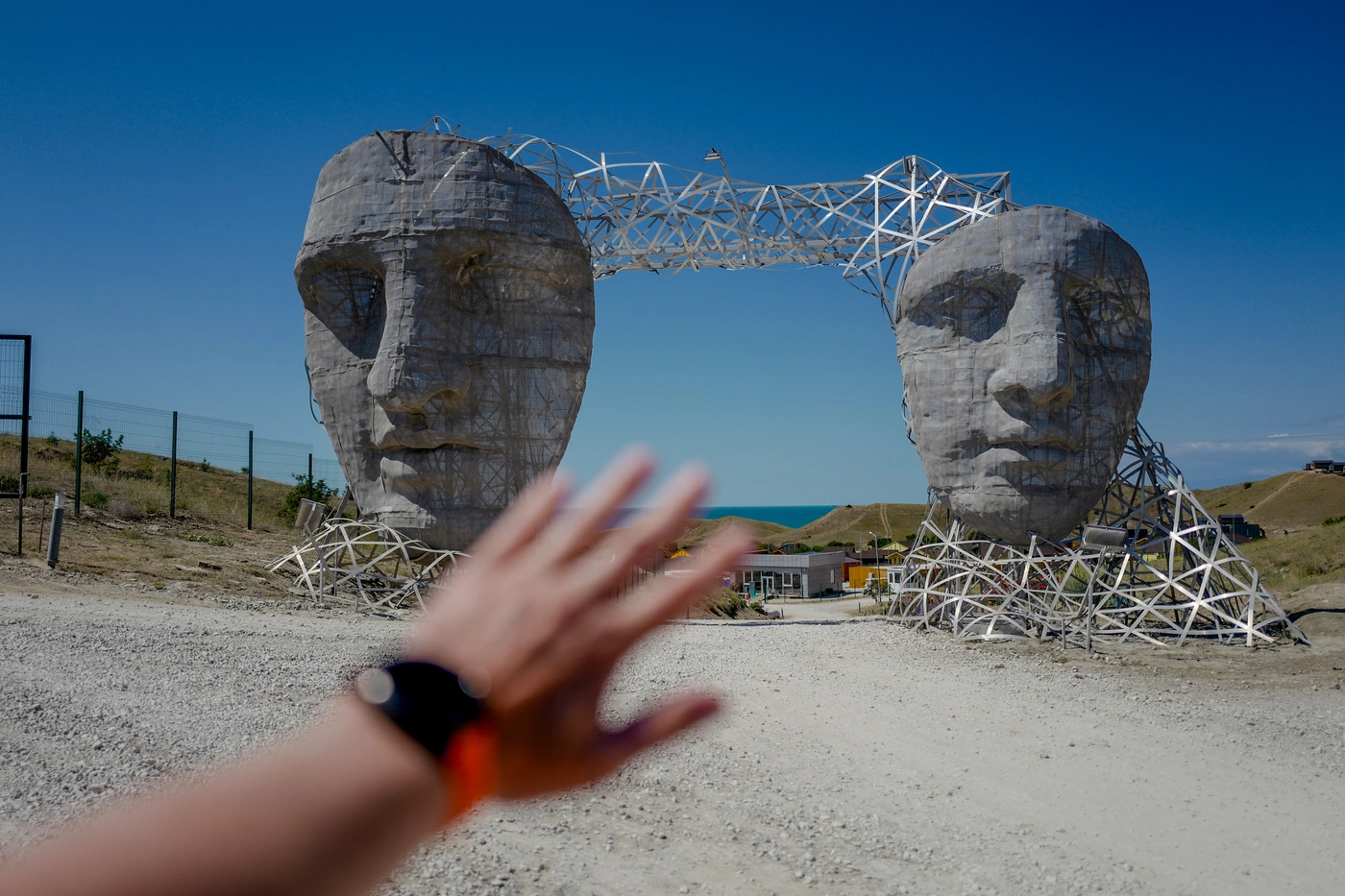
The Tavrida Art Cluster site, where the Kirillitsa educational session took place.
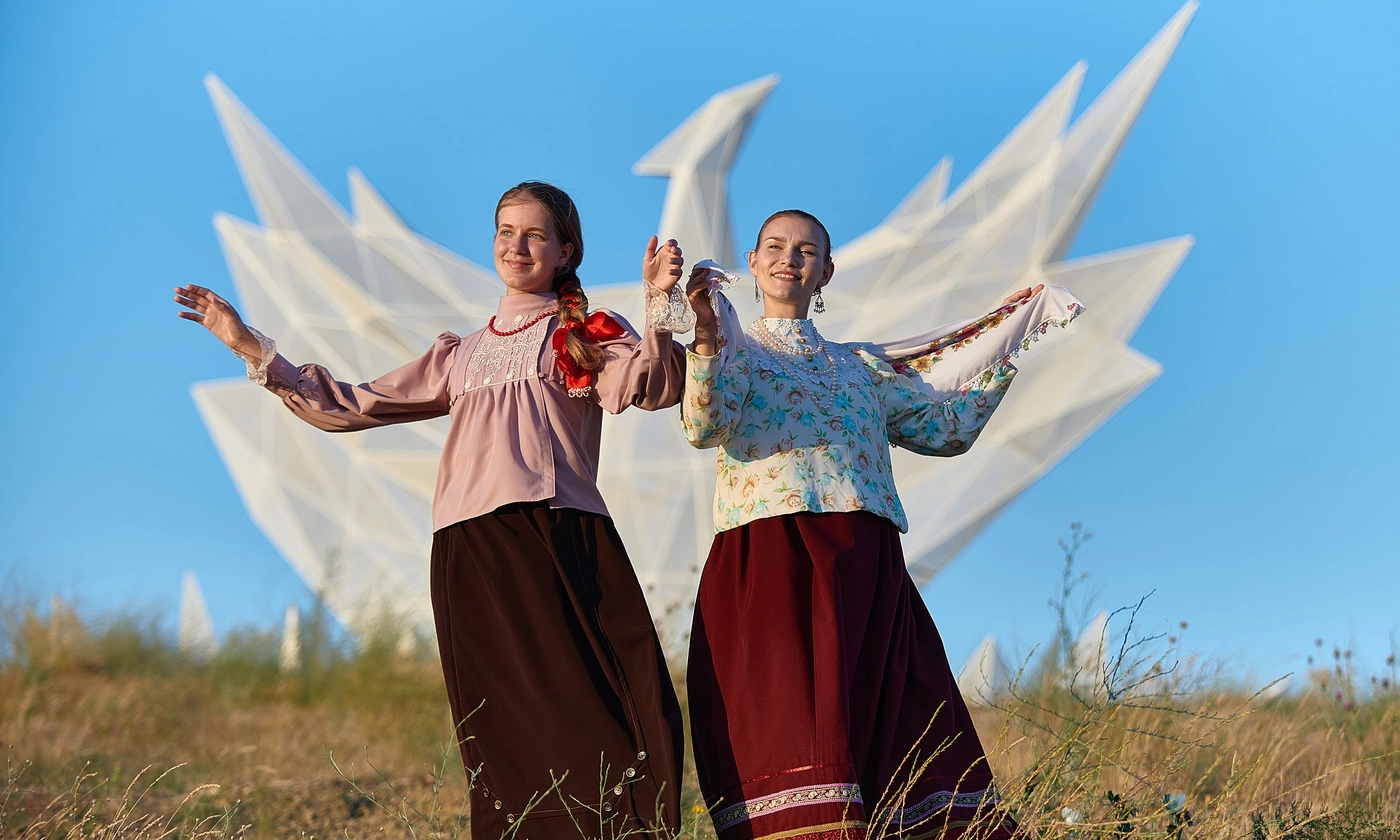
The visual symbol of Kirillitsa, a session dedicated to the cultural heritage of Russia's peoples, became the basis for the digital twin's Deep Zoom composition.
An undefined task as an educational method
At that moment I was working with Deep Zoom technology. On the way to Tavrida, the idea emerged to create a digital trace of the session as a single image that breaks down into thousands of photos of participants and events as you zoom in.
On the first day, we discussed the concept with the participants and split the future twin into three parts. For most of them, these were technologies and forms of teamwork they had not faced before. They had to learn them immediately, on a real project."
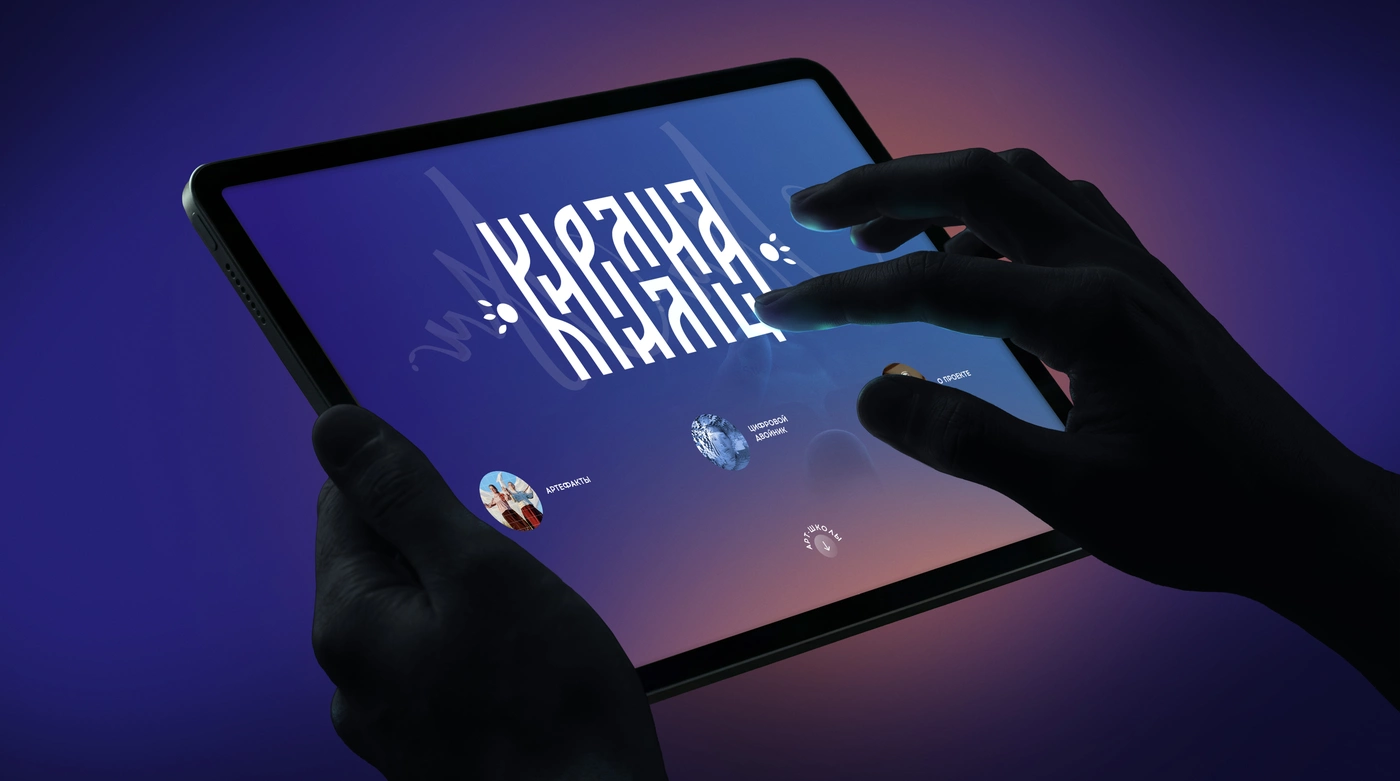
The Deep Zoom composition of the Kirillitsa digital twin.
Three directions, three spaces for growth
The first meeting mattered as much as the brief itself. Getting to know the participants made it possible to understand their experience and distribute the work so that each direction relied on real team skills.
Each direction had its own task and gave participants a way to learn new tools and approaches. Together, they were meant to form a single digital project.
Artifacts
Deep Zoom became the first element of the digital twin. The composition was based on a photo of the Kirillitsa symbol: as users zoomed in, it broke down into thousands of images taken during the session. To make it work, the large image had to be cut into tiles, and the system had to be installed and configured on a server to ensure a smooth transition from the overall image to individual photographs.
The Deep Zoom composition of the Kirillitsa digital twin: the session symbol breaks down into photographs of participants and events as users zoom in.
Language
This is how Tavriditsa appeared: a visual language of emoji and signs based on the typeface created during the session.
But the task went beyond graphics. The icons became the foundation for a separate immersive interface: a webcam recognized user movements, and gestures controlled what happened on screen. The team had to combine video input, gesture recognition, animation, and interface logic into a single browser-based mechanic.
The immersive interface of the Tavrida.ART digital twin, with the Tavriditsa visual language and webcam gesture control.
For the participants, this became an experience of turning a visual idea into a working digital interface.
Art
The third part of the digital twin presented the results of the creative schools. Each school received its own digital space where its projects, photographs, and videos could be shown.
The materials were collected and arranged by participants of the IT and Digitalization school according to a shared structure and visual guideline. As a result, the digital twin told the story not only of the event itself, but also of what was created during the session.
Pages for Kirillitsa's creative directions, with photos, videos, and participant work.
Learning on a real project
None of the participants knew exactly what the final result would look like. A lot depended on what the teams themselves could invent, assemble, and bring to a working state.
The third day was one of the hardest. Some solutions were still not working, a significant part of the content was missing, and materials from the type and motion design teams were still being created.
Each of the three parts of the digital twin was designed from the start as a standalone product. This made it possible to move iteratively: one working component already created a meaningful MVP, two expanded it, and all three together formed the full digital twin concept.
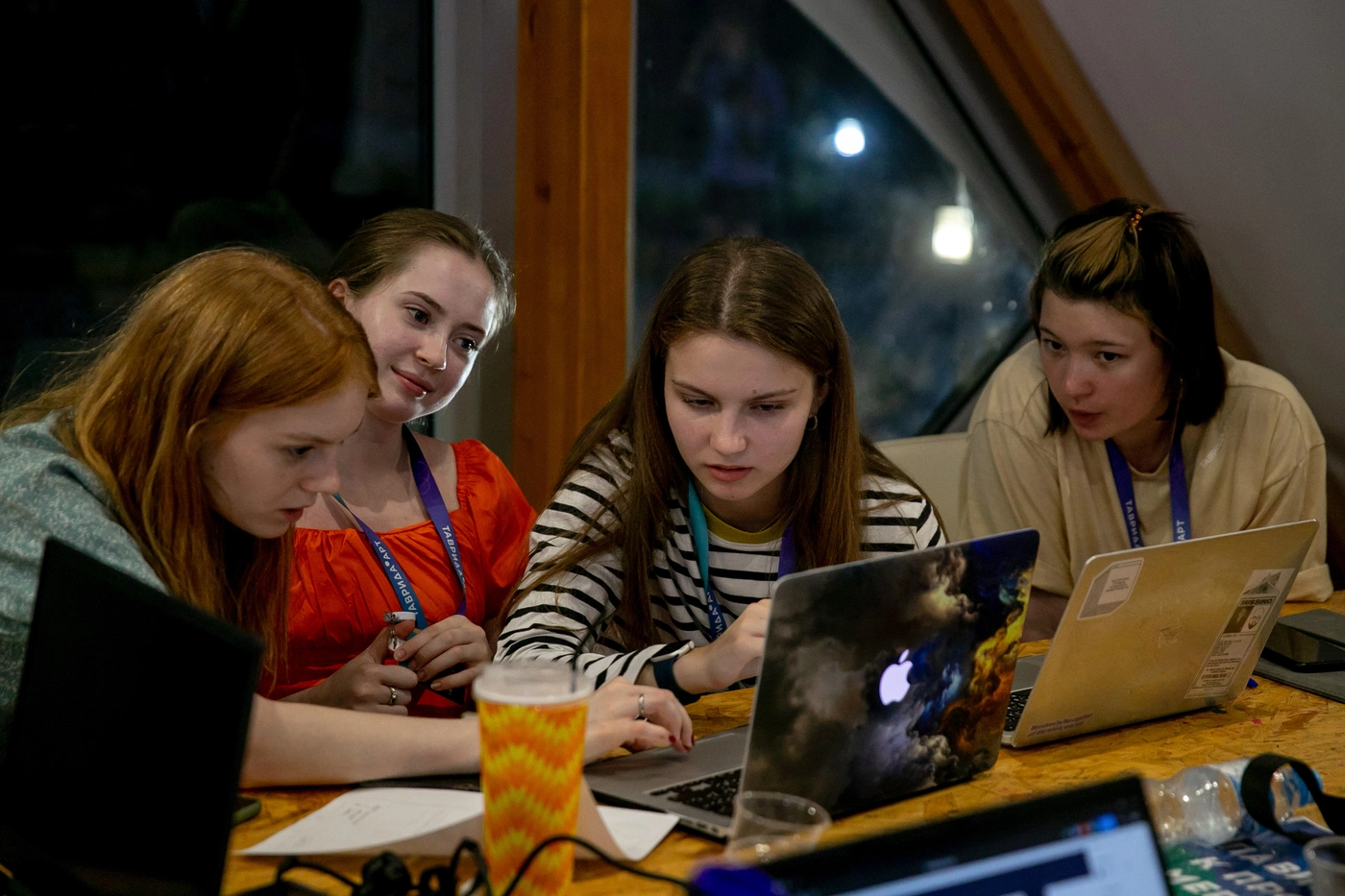
Participants of the IT and Digitalization school working on the digital twin of the Kirillitsa session at Tavrida Art Cluster.
By the final presentation, the teams had implemented all three directions and connected them through a shared interface and logic.
In five days, the participants learned tools and approaches many of them had never worked with before. Some prepared images for Deep Zoom, some designed interfaces, some wrote code, some assembled project pages, and some worked for the first time in a single team with designers, developers, photographers, and authors. The work continued after classes, sometimes with laptops in the tent until late at night.
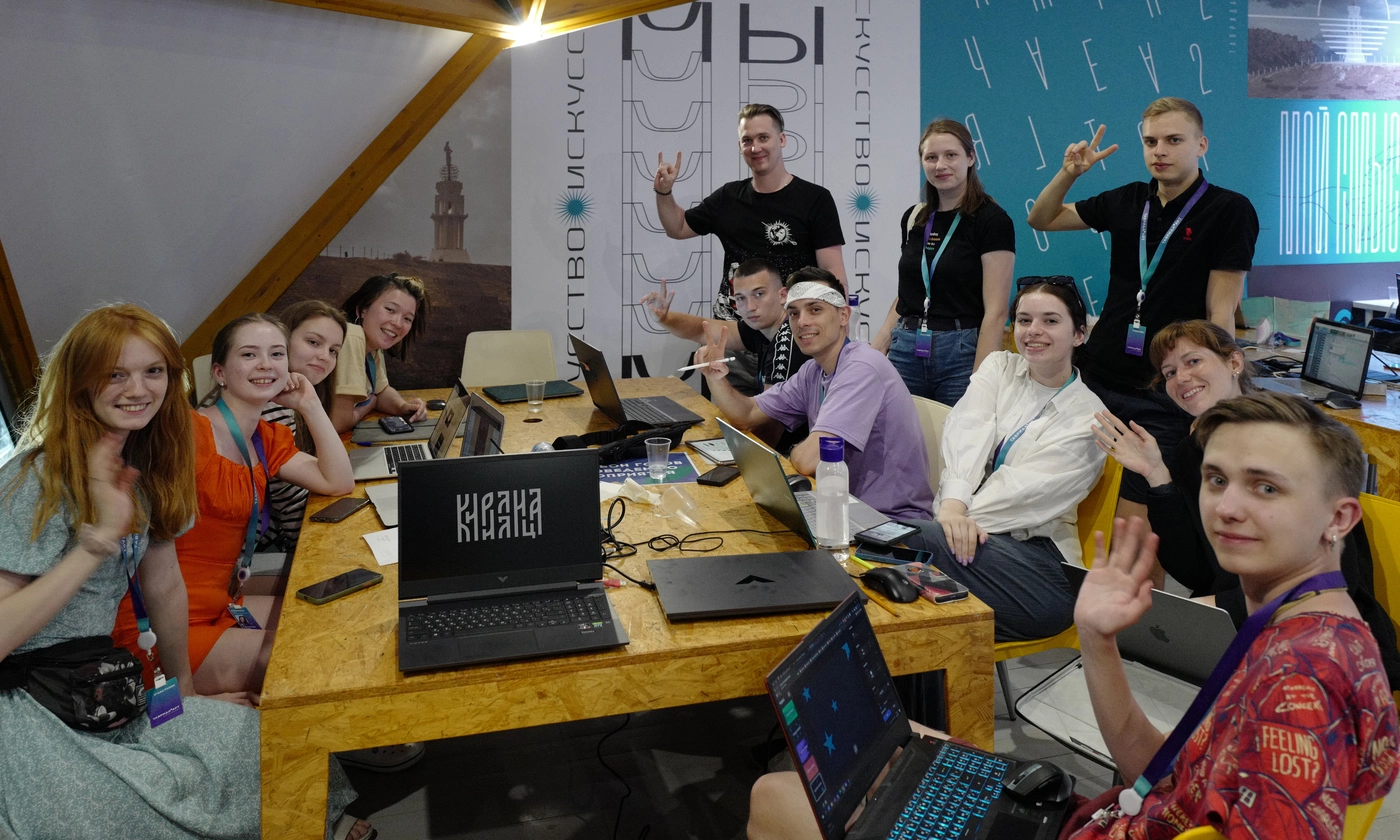
Participants of the IT and Digitalization school who worked on the digital twin of the Kirillitsa session at Tavrida Art Cluster.
The result of five days
By the final presentation, three independent ideas — digital artifacts, a visual language, and pages for the creative schools — came together as a single digital twin of the session.
It did not try to literally replicate the Tavrida space. Instead, the project preserved the memory of the event on several levels at once: through photographs, its own visual language, and the results of the participants' work.
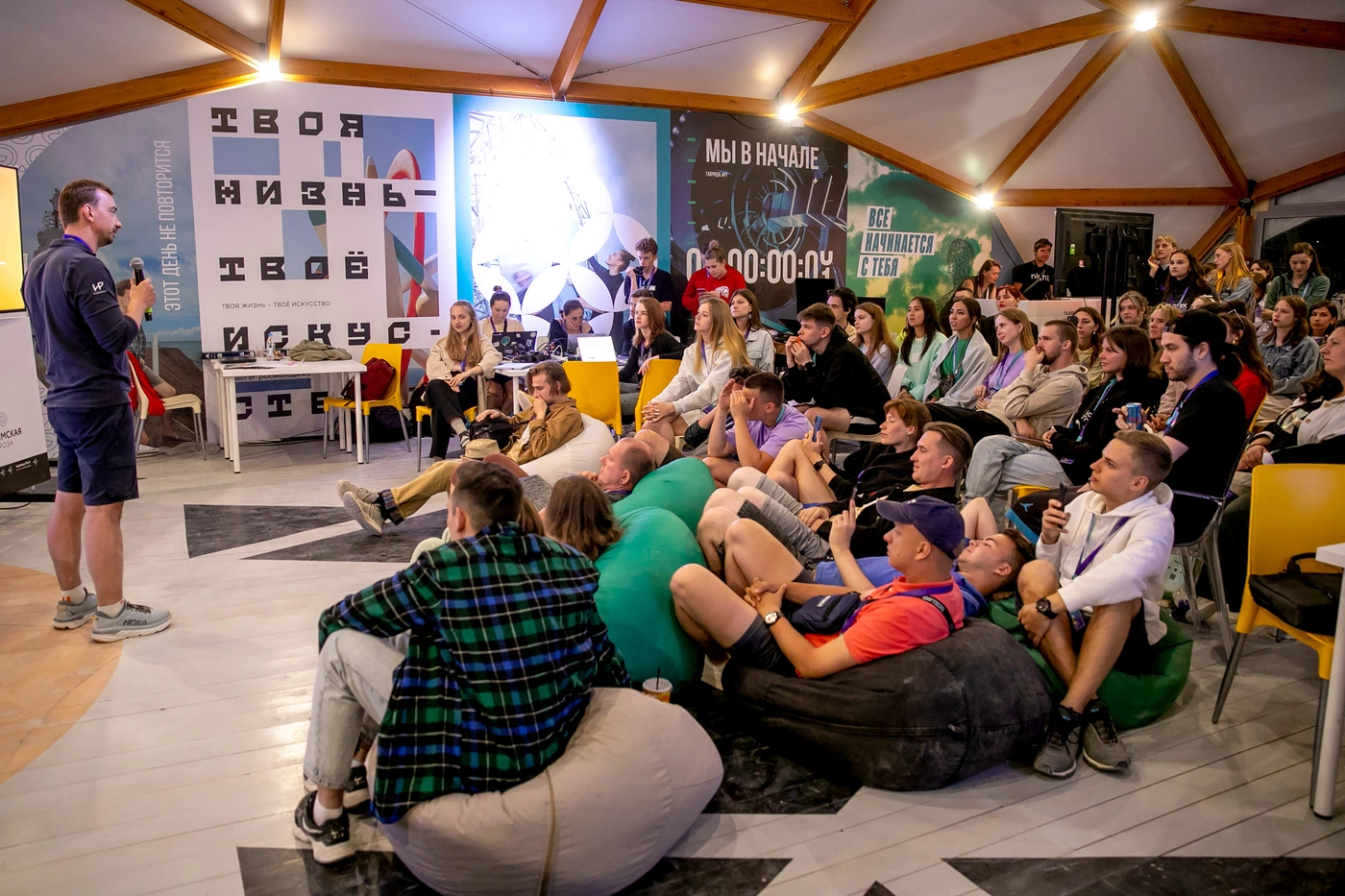
Vadim Smirnov presents the Kirillitsa digital twin at the final presentation of the IT and Digitalization school at Tavrida.ART.
For me, the main result of that week was the people. The participants took on tasks they had never done before and managed to assemble a real digital project out of separate parts."